









Israa Shamseldin
UCLA Undergraduate Student & Researcher
Introduction
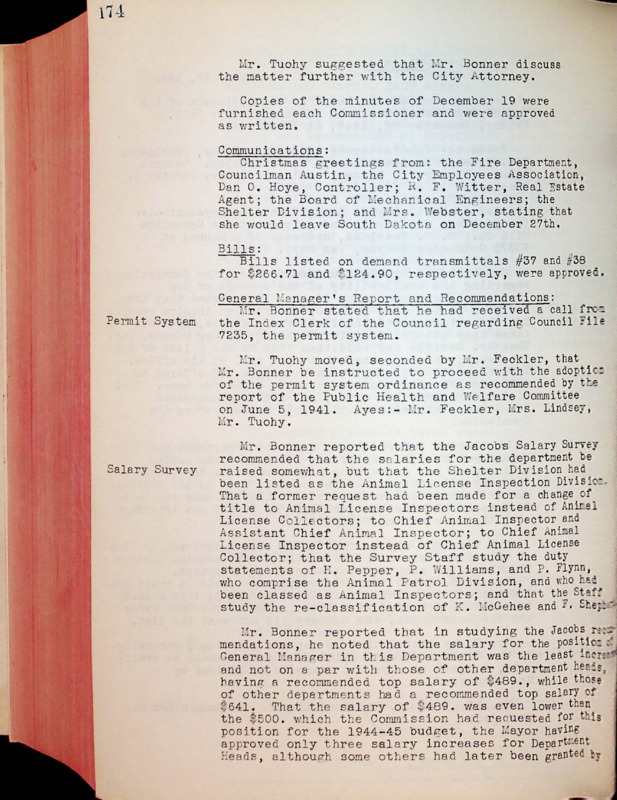
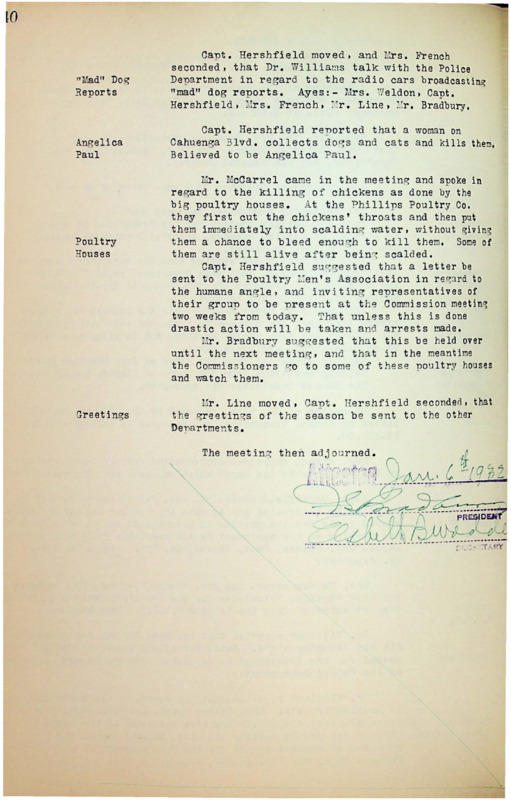
Los Angeles (LA) has a long and complex history of animal care and regulation. As early as the 1800s, the city was responsive to the demanding concerns surrounding animal welfare and urban infrastructure, and therefore built a network of animal facilities that both served and governed animals. What initially started as a city pound, eventually led to a network of animal shelters across the city, many of which underwent expansions, relocations, or were rebuilt as a result of public expectations or natural disasters. On July 28, 1909, the Humane Animal Commission was established with duties to “maintain a public pound, enforce ordinances relating to the impounding of animals, issue dog licenses, impound unlicensed dogs and destroy unclaimed dogs” (https://feldman.labyrinth.garden/admin/item/17912). This establishment of the Humane Animal Commission was a crucial step in formalizing animal regulation and promoting animal welfare. In 1925, this commission changed its name to the Department of Humane Treatment of Animals, although it was rather long (Feldman 2016). According to the January 30, 1929 board meeting minutes, the city clerk stated that, “the legislature had approved the Charter amendment changing the name of this department to Humane Department, eliminating the cumbersome wording” [M.1](https://feldman.labyrinth.garden/admin/item/17652). By 1947, there was a resolution that proposed yet another name change, “from Humane Department to Department of Animal Regulation” [M.5](https://feldman.labyrinth.garden/admin/item/17656). They kept this name until they officially became the Department of Animal Services in the year 2000 (https://feldman.labyrinth.garden/admin/item/17912). This page will explore the evolution of the shelter system, from the oldest city pound to our modern day care and control centers, tracking key milestones, openings, name evolutions, and shifting relationships between public agencies and private organizations. Let’s take a closer look at the shelter’s history and their ongoing commitment to animal welfare.
City Pound (1863)
In 1863, the Department of Animal Services as we know it today, was referred to as the LA Pound (Feldman 2016). During this 1863 Civil War period, animal populations in the city were strikingly high, prompting the need for a creation of a public pound to accommodate for such drastic increases. Additionally, certain animals were often found grazing in the LA Riverbed–an action that was disliked by Los Angeles due to this riverbed being a primary source of drinking water for the city. Together, these events helped trigger the establishment of the very first City Council mandated pound in 1863 (Feldman 2016). The City Pound was located on leased properties with the first one being on 2447 Porter Street. And although the pound was making an effort to keep everything under control, the conditions of the pound were overwhelmingly dire and the streets were full of sick dogs. Around the same time period, 1866, Henry Bergh founded ASPCA in New York, which led to a chain of reformers to help end animal suffering (McCaskill, 2021, p.398). By the 1880s, there was no more hiding the cruelties and killings that were happening in the pounds due to skilled journalism and increased public awareness. And with bounties being given to dogcatchers, increased theft and inhumane acts towards stray dogs were now a common practice (McCaskill, 2021, p.404). As conflict stirred, so did media representation. In 1902, for instance, an LA Times article portrayed a group of dogs in pounds with a caption saying “Awaiting Sentence”. The article condemned the practices of dogcatchers, the barred kennels, and the inhuman killings of dogs by asphyxiation (McCaskill, 2021, p.411). In 1904, the Los Angeles SPCA inspected a pound and found “claustrophobic kennels with no ventilation where dogs were crammed in beyond capacity” (McCaskill, 2021, p.414). By 1909, the Humane Animal Commission formed to help better the situation of the animals and pounds and promote welfare (Feldman 2016). By 1910, the Humane Animal Commission officially took over this pound on Porter Street (McCaskill, 2021, p.436).
The Ann Street Shelter (1928-1988)
February 15, 1928, marked the opening of the Ann Street Shelter at 215 West Ann Street. This $60,000 shelter was the first city-owned shelter and contained a tiled bath for dogs and cats and an airy stable. In December of 1949, the Department introduced the Euthanair chamber into this facility, providing what its proponents claimed at the time was the most humane method of destroying animals (https://feldman.labyrinth.garden/admin/item/17912). In 1971, the city ran a spay and neuter clinic as well, providing services for free to anyone whose annual income did not exceed $7,500 [B.46.6](https://feldman.labyrinth.garden/admin/item/13230). In just one year, the shelter was able to spay and neuter 2,200 animals[B.38.90](https://feldman.labyrinth.garden/admin/item/12382). As time progressed, however, the shelter required both funding and eventual replacement. The City estimated $278,000 for the modernizing of Ann Street Shelter in 1970 [M.13](https://feldman.labyrinth.garden/admin/item/17664). However, due to the defeat of a 10.3 million bond issue measure in 1973, the shelter had to wait thirty more years for funding (Feldman 2016). It wasn’t until 1988 that it was replaced by the North Central Care and Control Center on 3201 Lacy Street, after serving the public for sixty years.
North Central Care and Control (1988-present)
The North Central Care and Control Center is currently in operation and is fully equipped with a spay and neuter clinic, large animal barn, and a large multipurpose training room. (Feldman 2016). During the first year of operation, 1988, it had a total of forty-eight cat cages, twenty-eight puppy cages, and a recovery room for twenty-one cats and sixteen dogs. It additionally had hospital cages for six dogs, sixty-one indoor-outdoor kennel runs, and twelve dog observation cages (L.A. Times Archives, 1988). This shelter was also successful in community outreach events such as the “Adopt A Friend For Life” program, an initiative to promote adopting animals in shelters. On June 16, 1990, the program was kicked off in North Central shelter, and images F.19.3.1-F.19.3.10 portray highlights of the wonderful event. By 2006, the shelter was officially renovated with a training field, behavioral assessment room, and exterior kennel area. This expansion is reported to cost $6,135,778. Additionally, this was the first shelter to ever receive Gold level award in Leadership in Energy & Environmental Design (LEED). This is because it is one of the newest and most modern designs in the nation (Board of Animal Services Commissioners 2021). Overall, the outreach events and expansion both are revealing of the Department’s success and commitment to improve the quality of life for the animals.
The Old Valley Shelter (1936-1950) + East Valley Shelter (1950 - present)
In 1936, the first valley shelter– the Old Valley Shelter on 14737 Oxnard Street, Van Nuys was officially opened. This shelter unfortunately dealt with overcrowding, although the facility had the capacity to hold large animals. By April 1950, the Old Valley Shelter was officially replaced by the Valley Shelter (Feldman 2016). The Valley Shelter, also known as the East Valley Shelter was located at 13131 Sherman Way, North Hollywood before relocating to 14409 Vanowen Street, Van Nuys in 2007 (Garcetti 2021). This shelter cost $63,000 and was expecting a new public spay and neuter clinic by May 11, 1973[M.11](https://feldman.labyrinth.garden/admin/item/17662). This clinic boasts, “2700 feet of floor space and three surgical rooms”[B.38.32](https://feldman.labyrinth.garden/admin/item/12238). By 1995, the transfer of $275,000 in funds was approved to aid in the East Valley Reconstruction project which officially began on February 12, 1996 [M.20](https://feldman.labyrinth.garden/admin/item/17671). This reconstruction project marks a turning point for the shelter and reveals the Department’s commitment to enhancing animal welfare by improving the living conditions for the animals through this reconstruction.
Old West LA (1936-1950), West LA Missouri Avenue (1960-2022), West Valley Care & Control (1970-present), West LA Care & Control (2008-present)
On July 1st, 1936, the owner of the Old West LA Shelter on 2226 Granville Ave agreed to lease the property at $30.00 a month [M.2](https://feldman.labyrinth.garden/admin/item/17653). This shelter later became the second city-owned shelter, but after operating for roughly fourteen years, it was taken down to allow space for the city’s implementation of a combustible garbage incineration facility in 1950 (Feldman 2016).
On May 9, 1960– after a decade of there not being a local shelter serving the beaches and Westside areas– the West Los Angeles Missouri Avenue Shelter located on 11950 Missouri Avenue was finally opened (Feldman 2016). It cost $170,000 to build this shelter (https://feldman.labyrinth.garden/admin/item/17912). By 2022, however, it was replaced by an affordable housing complex known as Missouri Place (Sharp 2022).
The second Valley Shelter, the West Valley Shelter located at 20655 Plummer Street, Chatsworth cost $600,000 to build. It opened in August, 1970 and was unique in that it was the first shelter to have pastures for horses. This facility also had indirect lighting, sky lights, pastel colors, and air conditioning (https://feldman.labyrinth.garden/admin/item/17912). Unfortunately, this shelter underwent a troublesome fire in September 1970. Due to their profound efforts in working through the emergency, they received a Commendation of Merit from the Mayor and City Council (https://feldman.labyrinth.garden/admin/item/17912). As they attempted to recover from the disaster, this shelter was greeted with yet another disaster– the nearly inevitable earthquake on February 9, 1971. Nonetheless, the shelter was still able to provide emergency services to the animals affected by it. This shelter and the East Valley Shelter together were able to take in a total of 123 dogs, 36 cats, 2 monkeys, 2 chipmunks, 1 sheep, 13 rabbits, and 141 cavies [B.44.15] (https://feldman.labyrinth.garden/admin/item/13108). By 2006, this shelter underwent an expansion (Feldman 2016).
Not too far away, the West Los Angeles Care and Control located at 11361 W Pico Boulevard officially opened on January 1st, 2008. This facility was 26,900 square feet and consisted of a “public lobby, gallery, dog kennels, cat cages, medical facilities, spay/neuter clinic, community/training rooms and administrative areas”(Sinanian Development 2025). This shelter is still successfully operating.
San Pedro Harbor Shelter (Old Harbor) (1951-2017 ) + Harbor Care and Control (2017-Present)
The San Pedro Harbor Shelter on 735 W Battery Street was officially opened in June, 1951 with a final contract amount of $35,684.65 [M.7](https://feldman.labyrinth.garden/admin/item/17658). This city-owned shelter served as a replacement for the previously rented facility in Harbor City (Feldman 2016). On February 28, 1979, a new animal hospital was opened at this location and was financed through bequests from the George Whittell estate and contributions from Mercy Crusade, Inc. [D.87.3](https://feldman.labyrinth.garden/admin/item/14523). Image D.87.3 features Councilman Gibson at the ribbon cutting ceremony in 1979. As the years progressed, so did the shelter’s need for upgrades. According to June 6, 1994 board meeting minutes, “the contractor made recommendations for shelter improvements, including a) adding drop ceilings; b) installation of sinks; c) installation of stall showers instead of bathtubs” [M.20](https://feldman.labyrinth.garden/admin/item/17671). In the February 20, 1996 meeting minutes, it was noted that the Harbor shelter alteration was finally scheduled to be complete the week of February 26, 1996 [M.20](https://feldman.labyrinth.garden/admin/item/17671). Eventually, the 2 acre Harbor Care and Control Center located on 957 N. Gaffey Street was opened in August 2017, replacing the San Pedro Harbor shelter that was on Battery Street which has been sold as surplus property. This shelter’s funding was approved through Prop F., which was passed in November 2000. This new shelter offers 79 kennels instead of the previous 21 kennels in the old shelter as well as 41 cat cages. There is also grooming, spay and neuter services, and vaccine clinics at the shelter (Littlejohn 2017). This significant upgrade and increased capacity yet again reveals the progression towards better animal centered care.
South Los Angeles Care and Control (1950-present)
The South Los Angeles Care and Control, which was commonly known as the Southwest Branch Animal Shelter in the 1950s and South Central Shelter (SOC shelter) in the 1990s, has had a long history. On February 3, 1949, the “Finance Committee approved the settlement and purchase of the S.P.C.A. property for $75,000 [M.6](https://feldman.labyrinth.garden/admin/item/17657). Upon acquiring the LA S.P.C.A property and kennels at 3612 11th Avenue, this facility became the Southwest Branch Animal Shelter and Annex (Feldman 2016). In the mid-to-late 1990s, the shelter faced overcrowding issues (Feldman 2016) as well as seismic issues. According to a record from the board meeting minutes, by 1994, the “Department was ordered to vacate the seismically condemned South Central facility”[M.20](https://feldman.labyrinth.garden/admin/item/17671). To help facilitate this transition, the General Services donated land west of 36th Street for the construction of a temporary SOC shelter. A deadline of October 1995 was put into effect for the transfer of animals from the SOC shelter at 3612 11th Ave to the temporary SOC shelter near 36th Street, thereby allowing for the demolition of the old building [M.20](https://feldman.labyrinth.garden/admin/item/17671). According to the 1995 meeting minutes, the permanent facility was proposed to cost $4.2 million with $700,000 being allocated for the temporary shelter. This budget decrease from $6,367,000 to $4.2 million would restrict the new facility to only having one floor instead of the three previously planned floors [M.20](https://feldman.labyrinth.garden/admin/item/17671). For reference, the building plan for the permanent SOC Shelter can be found in [D.157.6](https://feldman.labyrinth.garden/admin/item/13952 ). Some things to highlight from this plan are the locations of the cat isolation room and grooming room. The cat isolation room was planned to be near the medical treatment room rather than being close to other healthy cat rooms, therefore preventing disease transmission. The grooming room was to be located near the small animals room, therefore making it easily accessible by staff. [D.157.6](https://feldman.labyrinth.garden/admin/item/13952 ).
By 1997, the temporary SOC shelter underwent an inspection, which revealed its dire need for renovation. In a letter written by chief veterinarian Dena Mangiamele, several concerns were examined and addressed. For one, the fly control around the fridge unit had the accumulation of body fluids around it, thereby predisposing the area to flies, zoonotic diseases, and slipping [D.157.4](https://feldman.labyrinth.garden/admin/item/13950). Additionally, the length of the examination table in the medical room required an increase in size because the dogs impounded were usually above sixty pounds [D.157.4](https://feldman.labyrinth.garden/admin/item/13950). Furthermore, the eye wash in the medical room was found to not have been installed correctly, leading to flooding. Additionally, the vehicle washing area had bad drainage, leading to “... fluids such as urine, feces, and blood accumulate and/or run down the main parking lot” [D.157.4](https://feldman.labyrinth.garden/admin/item/13950). It's also worth mentioning that the kennel flooring had damage to the floor leading to its lack of operation for two months [D.157.4] (https://feldman.labyrinth.garden/admin/item/13950). Images D.157.7.1-D.157.7.2 provide context for some of the damage that was within this shelter. In an effort to fix all of the concerns addressed above, the facility developed solutions which can be found in this memorandum by architect William A. Holland [D.157.5]( https://feldman.labyrinth.garden/admin/item/13951 ). Some key things to highlight from this memorandum are the installation of the trench drain to mitigate water that runs in the parking lot. Additionally, the refrigeration unit had to be reconfigured to allow for easier access to and around the unit, and the drain of this unit has to be reworked [D.157.5]( https://feldman.labyrinth.garden/admin/item/13951).
By 2013, the shelter, which we now refer to as South Los Angeles Care and Control, was finally relocated to Chesterfield Square at 1850 W 60th St with the implemented changes (Feldman 2016). The decade-long building project was anticipated to have been complete by 2012, however, construction delays prolonged the process. This shelter cost $9 million dollars to build and contains “more than 250 outdoor kennels with misters and retractable roofs, heated floors and a sleek modern design” (Aguilar 2012). The modern features that this shelter possesses reveals the significant evolution from the shelter’s earlier issues with sanitation and overcrowding. The upgrade further reveals the goal towards progressive and better animal facilities.
Northeast Valley Animal Shelter (NEV shelter) (2006-2025)
The Northeast Valley Animal Shelter (NEV shelter) also referred to as the Mission shelter has a unique history. On July 7, 2005, a portion of the walls of the Native American Quarters of the San Fernando Mission was discovered by workers who were at the shelter’s construction site. According to an archeologist, the foundational walls were around 200 years old, and served as a home to Navajo families in the late 1700s and early 1800s (Rosendahl 2006). Upon excavation and funding, with approval of course, the shelter was officially completed on July 31, 2006. The shelter is located at 11030 Stranwood Avenue Mission Hills with 47,300 square feet of space. It had everything you would want a public shelter to include, such as a public lobby, cat cages, dog kennels, spay and neuter clinic, and medical facilities. This shelter was constructed using Prop F. funds in 2008, from 2008-2011, LAAS used this shelter, “as a holding facility for evidence animals awaiting court action—including animal cruelty cases; mothers with puppies or kittens, or animals requiring isolation for medical reasons” (Daugherty 2023).
Initially, the shelter was arranged to operate by departmental staff, however, significant decreases to the City’s budget resulted in a change of fate. A proposed solution to combat the financial situation was to find a private contractor that would provide services such as sterilizations and adoptions. The Office of the City Administrative Officer went ahead and released a Request For Information in January 2011. Best Friends Animals Society was awarded the contract and thereby permitted to run the Northeast Valley Animal Shelter by January 2012 (Barnette 2014). Best Friends Animals Society, is a prominent animal welfare organization founded in 1984 with a mission to end animal killing in shelters, and eventually make the entire country no-kill (Best Friends Animal Society 2025). With a $1 per year lease, Best Friends ran the NEV shelter until December 31, 2022 with the contract including repairs and maintenance covered by the City. This was contingent upon taking in 3,000 animals annually, at minimum from LAAS and performing at least 5,000 spay and neuter surgeries on shelter animals (Daugherty 2023). Best Friends was able to accomplish many things within its contracted term. In 2013 alone, it achieved 3,570 adoptions, 2,239 transfers from Animal Services, 5,510 animals pulled from LAAS’ six shelters, 6,183 sterilizations, and 1,488 spay/neuter surgeries. It also paid around $1 million to the No-Kill LA (NKLA) coalition partners (Barnette 2014). When Best Friends vacated the shelter in 2022, another rescue organization took its place in running the shelter, despite the LAAS’ shortage in kennel space. This action stirred emotion from The Valley Alliance of Neighborhood Councils (VANC) and they expressed their frustration in a resolution on July 14, 2022
This shelter [Northeast Valley] is a City facility built with Proposition F funds to be a municipal animal shelter, open to the public. It was not meant to be a private facility to house rescue organizations. Nevertheless, the Board of Animal Services Commissioners has issued an RFP (Request for Proposal) to do just that, lease the Northeast Valley Animal Shelter to rescue organizations to operate. The Board of Animal Services Commissioners and LAAS did not provide an opportunity for the affected Neighborhood Councils to provide input into this decision. Therefore, it is RESOLVED that VANC takes the position that the Department of Animals Services and City Council should receive input from the affected Neighborhood Councils before releasing the Request for Proposal for rescue organizations to operate the Northeast Valley Animal Shelter (Mausner 2024).
The commission still went ahead and awarded Paw for Life, a partner of Best Friends with a three year contract since there was no retroactive effect regarding the shelter (Mausner 2024). Overall, the partnership exhibited between the city and private organizations was impressively effective. Best Friends’ statistics and their ability to increase adoption rate and animal care reveal that they were in fact a success.
Conclusion
Overall, the planning, construction, funding, and expansion of the animal shelters in LA have been a very demanding, yet commendable undertaking. Each shelter has had its own journey with its ups and downs, nonetheless, they all carry the same goal– animal welfare. Currently, there are six animal shelters operating that are run by the Department of Animal Services: North Central Care and Control, South LA Care and Control, West LA Care and Control, Harbor Care and Control, East Valley Care and Control, and West Valley Care and Control. For more information, check out the corresponding timeline.
Bibliography
Aguilar, Erika. “Opening of New South La Animal Shelter Is Delayed.” LAist, November 5, 2012. https://laist.com/news/kpcc-archive/opening-new-south-l-animal-shelter-delayed.
Barnette, Brenda. “La City Clerk - City of Los Angeles.” Report Back on Services Provided at Northeast Valley Animal Shelter, April 22, 2014. https://clkrep.lacity.org/onlinedocs/2011/11-1345_rpt_das_04-22-14.pdf.
Best Friends Animal Society. “Our Mission | Best Friends Animal Society.” Best Friends Animal Society - Save Them All, 2025. https://bestfriends.org/who-we-are/our-mission.
Board of Animal Services Commissioners. “West Valley Animal Shelter-Long Term Plan (CF#20-1114).” lacity, January 28, 2021. https://clkrep.lacity.org/onlinedocs/2020/20-1114_rpt_DAS_01-28-2021.pdf.
Daugherty, Phyllis. “La Animal Services’ Mission Shelter Cannot Be a ‘Gift of Public Funds.’” CityWatch Los Angeles, January 9, 2023. https://www.citywatchla.com/animal-watch/26246-la-animal-services-mission-shelter-cannot-be-a-gift-of-public-funds-to-non-profit-organizations.
Feldman, Steven. “Department of Animal Services: 153 Years of Animal Care.” City of Los Angeles, June 29, 2016. https://lacity.gov/highlights/department-animal-services-153-years-animal-care.
Garcetti, Eric. “RE: WEST VALLEY ANIMAL SHELTER- LONG TERM PLAN (CF#20-1114).” CF-20-1114-West-Valley-Animal-Shelter-reopening-report-back-2021.01.28.pdf, January 28, 2021. https://www.chatsworthcouncil.org/wp-content/uploads/2021/01/CF-20-1114-West-Valley-Animal-Shelter-reopening-report-back-2021.01.28.pdf.
Littlejohn, Donna. “Staff, Pets Lap up New Animal Shelter.” Daily News, August 29, 2017. https://www.dailynews.com/2008/06/20/staff-pets-lap-up-new-animal-shelter/.
“L.A. North Central Animal Care and Control Center Now Open to the Public.” Los Angeles Times, March 10, 1988. https://www.latimes.com/archives/la-xpm-1988-03-10-vw-1368-story.html#:~:text=California-,L.A.%20North%20Central%20Animal%20Care%20and%20Control%20Center%20Now%20Open,telephone%20numbers%20to%20lessen%20confusion.
Mausner, Jeffrey. “Council File No: 24-0600.” lacity, April 27, 2024. https://clkrep.lacity.org/onlinedocs/2024/24-0600_PC_PM_04-27-2024.pdf.
McCaskill, Sean. “A Municipal Tail: The Rise of Animal Control in Los Angeles, 1880-1909.” Historical Society of Southern California, 2021.
Rosendahl, Bill. “CPY Document - City of Los Angeles.” Council File 05-2171 , May 5, 2006. http://clkrep.lacity.org/onlinedocs/2005/05-2171_ca_5-3-06.pdf.
Sharp, Steven. “Missouri Place Affordable Housing Debuts in Sawtelle.” Urbanize LA, July 21, 2023. https://la.urbanize.city/post/missouri-place-affordable-housing-debuts-sawtelle.
“West Los Angeles Animal Care Center.” West Los Angeles Animal Care Center | Sinanian Development, Inc. Accessed May 17, 2025. https://www.sinanian.com/projects/west-los-angeles-animal-care-center.php#:~:text=This%20project%20consisted%20of%20constructing%20a%20new,medical%20facilities%2C%20spay/neuter%20clinic%2C%20community/training%20rooms%20and.
Resources + Related Items
UCLA Undergraduate Student & Researcher